
Bukken Box
May 27, 2026

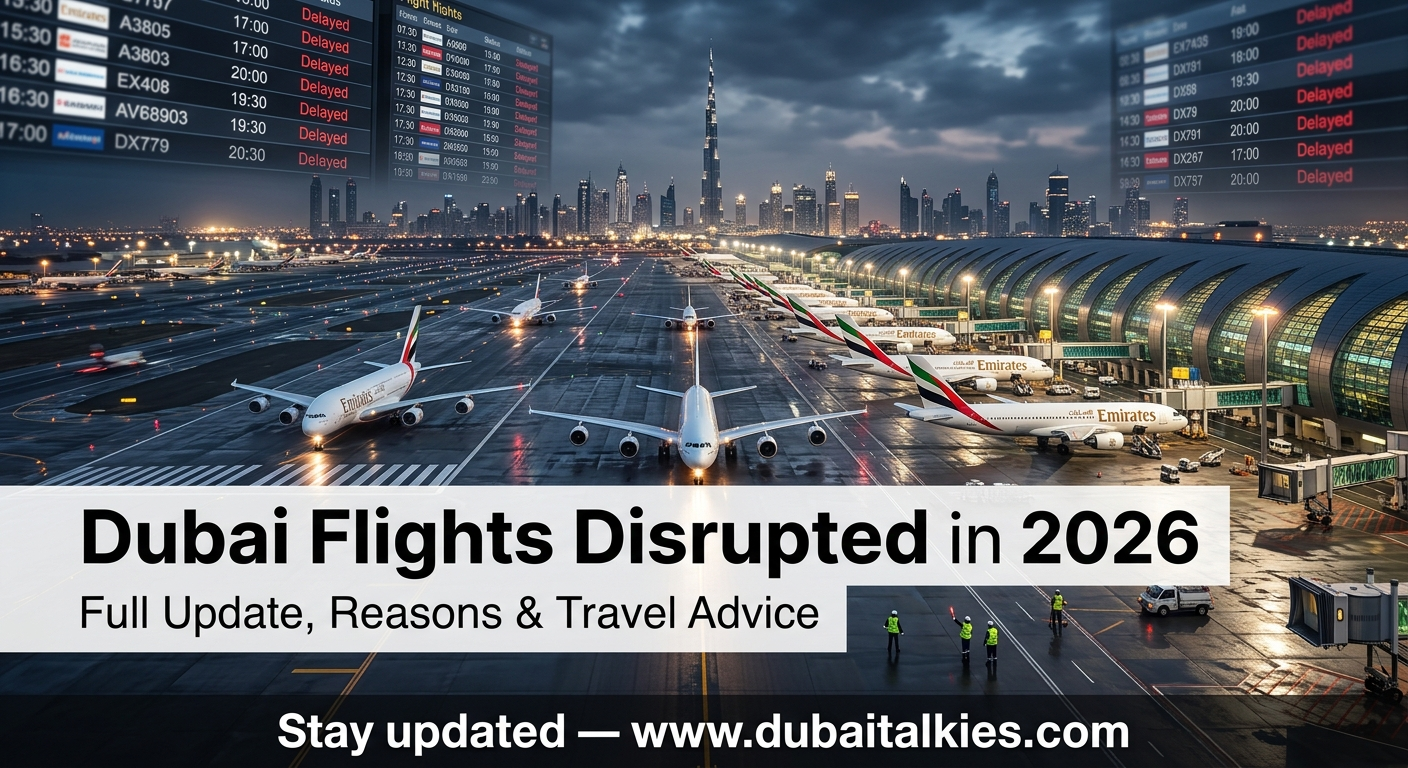
There is a state of uncertainty in air travel within the Middle East in 2026, and Dubai is among the global hubs that have been adversely affected. Having a global standard of airports and connectivity, Dubai has been a favourite transit centre among most of the travellers. Nonetheless, the recent events have affected the normal operation of the flights, and passengers have to end up with delays, cancellations and last-minute changes.
Regional tensions, operational issues, and several factors are coming into play to control flight schedules. But first, in this in-depth report, we de-jumble what is happening, why there are disruptions in flights, the effects on the travellers, and the way you can plan your journey successfully during this period.
In the last several weeks, airlines serving in and out of Dubai have posted regular updates on disruptions to flights. Customers have complained of delays of a few hours to full cancellations. The flights are being diverted in several instances to avoid some airspaces, and this leads to an increase in travel time.
Large foreign airlines have also been on the defensive. As an example, Air France has suspended some of its routes in the region, including the ones that have connections with Dubai. Equally, other airlines such as the IndiGo and Air India have also cautioned against the changing situations, which lead to abrupt changes in schedules.
In spite of these problems, the airports in Dubai are still operational and can accommodate masses of passengers. Nonetheless, the state of affairs is dynamic, and passengers should keep up with the changes.
Travelers and people who observe the industry need to understand the underlying reasons behind these disruptions. The present aviation challenges cannot be attributed to any one aspect but it is a blend of geopolitical, environmental and also operational.
The limitation of some of the airspace corridors in the Middle East is one of the major causes of the disruptions. Airlines depend on preplanned routes of flight to attain efficiency and safety. But as some of the areas are limited, the airlines will have to come up with alternative routes.
Such reroutes have a tendency to raise the duration of flights, fuel costs, and the complexity of operations. Some of them do not allow airlines to continue with their regular schedules, causing delays and cancellations.
The Israel-Hamas War, which has been going on, is still affecting the aviation activities in the region. Although Dubai is a safe and stable place, the wider geopolitical situation necessitates precautionary actions by the airlines.
The airlines carry out risk analysis on an ongoing basis, and even indirect risks might cause alteration of routes or schedules of flights. The primary concern is passenger safety, and these are among the conventional aviation standards.
Diverted routes are more lengthy and consume more fuel, thus becoming a high cost of operation. These additional costs are putting pressure on the airlines in terms of finances.
To manage costs, airlines are:
Reducing flight frequencies
Cancelling less profitable routes
Increasing ticket prices
This has created a ripple effect, impacting travellers worldwide.
The disruptions have also been caused by weather conditions in the United Arab Emirates. Infrequent heavy rains, thunderstorms, and low visibility have slowed the running of the airports.
Although such weather events are short-term, they contribute to the further complexity of an already difficult situation.
The air traffic is disrupting the travellers in various manners such as logistical issues and financial burden.
Customers are now experiencing long queues in airports and delays of flights up to several hours. In some instances, passengers have had to cancel flights at short notice, and they are left to make alternative plans.
Dubai is a large transit port, and a good number of passengers are dependent on connecting flights. The incoming flights delays tend to lead to missed flights, which cause further inconvenience and extra expenditure.
The low supply and high operation costs have significantly increased airfares. The bookings made at the last minute are also very costly, and travel becomes unaffordable to some passengers.
One of the greatest problems facing travellers is uncertainty. As the schedules are often changed, it is hard to make any plans and be sure of a trip. This has contributed to the stress of passengers.
It is also affecting the tourism sector of Dubai that relies on international tourism. Since the city is still receiving visitors, some tourists are delaying their visits because of doubts.
Airlines are in the process of trying to control the situation and have tried to ensure that they cause minimal disruption to passengers.
The majority of airlines are updating customers in real-time using mobile applications, email and SMS. This assists the passengers with updated information about their flights.
Most of the airlines are giving flexi booking to suit the changing travel plans. The passengers are able to reschedule flights on reduced or no charges.
Airlines are constantly changing flight routes in order to make them safe and efficient. This is through a tight liaison with the aviation authorities and air traffic control.
Nonetheless, the aviation sector in Dubai is robust and healthy. The city has airports that have new technology, and well-developed systems to address disruptions.
Authorities are focusing on:
Enhancing passenger communication
Managing crowd flow
Providing assistance services
The goal is to ensure a smooth travel experience even during uncertain times.
In case you are going in or out of Dubai, the following tips will guide you through the situation.
Always ensure that you have checked your flight status before going to the airport. Official airline websites and apps are the best sources of information.
Early arrival will provide sufficient time to deal with any unforeseen delays/ changes. When travelling on international flights, one should arrive at the airport at least 34 hours before departure time.
Get tickets with options of changing or cancelling with slight penalties. This is more flexible in case of disruptions.
Delays and cancellations, as well as missed connection can be covered under travel insurance. It is an investment worth having in uncertain periods.
Make sure that you have all you need, including documents, medication and valuables in your carry-on bag. This will make sure that you are ready to face whatever may come along.
Dubai is not only a regional centre but also an international force in the aviation industry. Inconveniences in this case have far-reaching consequences.
Dubai is commonly used as a transit point by flights between Europe, Asia, and Africa. This has a ripple effect in many areas when timetables are disrupted.
Airlines are changing the way they operate in the world, and this is a sign that global aviation is interconnected.
Yes, Dubai is among the safest cities in the world. The prevailing unrests are mainly operational and preventive.
The United Arab Emirates government has put in place strong safety measures, giving importance to the safety of the residents and visitors.
Tourists can easily go to Dubai without fear, bearing in mind that flexibility and readiness are necessary.
Analysts reckon that there will be a certain amount of destabilisation in the short run. Flight operations, however, are being stabilised.
Airlines and authorities are working together to:
Restore normal flight schedules
Improve communication
Enhance passenger experience
Things will get better slowly but tourists are encouraged to be on the lookout and make plans.
The Bigger Picture: A Test of Resilience
The resilience of the aviation industry in Dubai is brought forward by the current scenario. The city is still operating as a global hub despite the numerous challenges it is experiencing.
It is also during this time that the issue of flexibility becomes relevant in the aviation sector. Airlines, airports and travellers are changing to new realities.
The causes of flight disruptions in Dubai in 2026 are a complicated set of forces, such as restrictions in the airspace, geopolitical tensions, increased costs, and the weather situation. Although these inconveniences are coming in, airlines and the authorities are dealing with them well.
To the commuter, it only matters to keep updated, be flexible and have plans. Nonetheless, Dubai has been able to assert its position as one of the aviation hubs across the world.
With the changing circumstances, it will be relevant to keep track of the factual information to enjoy a hassle-free travel experience.
For the latest Dubai flight updates, travel news, and real-time developments, stay connected with DubaiTalkies✈️












)





Comments
No comments yet. Be the first to comment!