
3 Free Reels From Your Existing Video - Creator Trial (Free)
September 16, 2026











© Dubai Talkies. All rights reserved by zubaaly management LLC.

Dubai has established itself as one of the world's leading destinations for entrepreneurs, startups, and international investors. With its strategic location, world-class infrastructure, business-friendly regulations, tax advantages, and access to global markets, Dubai continues to attract thousands of new businesses every year.
Whether you are planning to launch a technology startup, consulting company, digital agency, trading business, restaurant, manufacturing unit, healthcare service, or any other enterprise, Dubai provides an ecosystem designed to support business growth.
However, starting a business in Dubai involves much more than simply registering a company. Entrepreneurs must choose the right business activity, legal structure, licensing authority, location, banking partner, and compliance framework. Understanding these steps before investing can save both time and money and help avoid costly mistakes.
If you're also planning to establish your digital presence after company formation, you may find these resources useful:
Business Profile vs Company Website: Which Generates More Leads?
Why Every Dubai Business Needs a Strong Digital Presence to Grow Faster
These guides explain how businesses can increase visibility and attract customers after launching successfully.
Dubai has transformed from a regional trading hub into one of the world's most diversified business economies. Today, companies from almost every industry operate successfully within the emirate.
Several factors contribute to Dubai's attractiveness for entrepreneurs.
The city offers political stability, advanced infrastructure, excellent transportation, a highly skilled international workforce, modern banking systems, investor-friendly regulations, and continuous government support for innovation and business development.
Dubai also serves as a gateway connecting Europe, Asia, and Africa, allowing businesses to expand into multiple international markets from a single strategic location.
These advantages continue attracting investors from around the world.
Before registering a company, entrepreneurs should understand how Dubai's business ecosystem operates.
Businesses generally fall into three broad categories depending on where they choose to establish operations.
Mainland companies are licensed through Dubai's economic authorities and can operate throughout the UAE market.
This structure is suitable for businesses that plan to serve government entities, local customers, corporate clients, or multiple cities within the UAE.
Mainland companies also enjoy greater flexibility regarding office locations and business expansion.
Dubai hosts numerous internationally recognised Free Zones that cater to specific industries, including technology, media, healthcare, logistics, finance, education, and manufacturing.
Free Zones provide streamlined company registration procedures, attractive business incentives, and specialised ecosystems that support particular industries.
Many startups choose Free Zones because of simplified administration and business support services.
Offshore companies are generally used for international business activities, asset management, holding companies, and global investments rather than conducting direct commercial operations within the UAE.
Entrepreneurs should carefully evaluate their business objectives before selecting this structure.
The first step in starting a business is selecting the correct business activity.
Dubai allows thousands of approved business activities covering industries such as:
Technology
Consulting
Marketing
Healthcare
Construction
Education
Manufacturing
Trading
Hospitality
Real Estate
Financial Services
Professional Services
The activity you choose determines the type of business licence required and influences future regulatory requirements.
Selecting the wrong activity can delay company registration and create compliance issues later.
Many businesses fail because founders skip proper market research.
Before investing capital, entrepreneurs should evaluate customer demand, competition, pricing models, industry trends, and future growth opportunities.
Questions worth answering include:
Who are your competitors?
Who are your target customers?
What problems are customers trying to solve?
How large is the potential market?
Which businesses already dominate your industry?
What unique value can your business offer?
Strong market research significantly increases the chances of building a successful business.
Although not every business licence requires a formal business plan, every entrepreneur should prepare one.
A well-developed business plan acts as the roadmap for future growth.
It defines business objectives, revenue strategy, operational processes, financial projections, marketing plans, target audience, competitive positioning, and expansion opportunities.
Business plans also become essential when applying for funding or approaching investors.
Selecting the appropriate legal structure affects taxation, ownership, licensing requirements, liability protection, and future scalability.
Some of the common legal structures include:
Suitable for individual entrepreneurs offering professional services.
One of the most popular business structures in Dubai because it offers liability protection and flexibility for commercial activities.
Commonly used by professionals such as consultants, engineers, doctors, architects, and legal practitioners.
Allows existing international companies to establish operations within Dubai while maintaining their parent company's identity.
Choosing the right structure should always align with long-term business objectives.
Business names in Dubai must comply with UAE naming regulations.
Names should avoid offensive language, religious references, political terminology, and existing trademarks.
Many entrepreneurs prefer names that clearly communicate their services while remaining easy to remember.
A strong business name also strengthens future branding and digital marketing efforts.
There is no universal answer.
Businesses serving local UAE customers often benefit from Mainland registration.
Companies focused on international markets, exports, technology services, or specialised industries may find Free Zones more suitable.
The right decision depends on customer location, business model, expansion plans, operational flexibility, and licensing requirements.
Entrepreneurs should compare multiple options before making their final decision.
Today's businesses need more than a registered company.
Customers research businesses online before making purchasing decisions.
Having a professional website, active social media presence, Google Business Profile, and business listing significantly increases credibility.
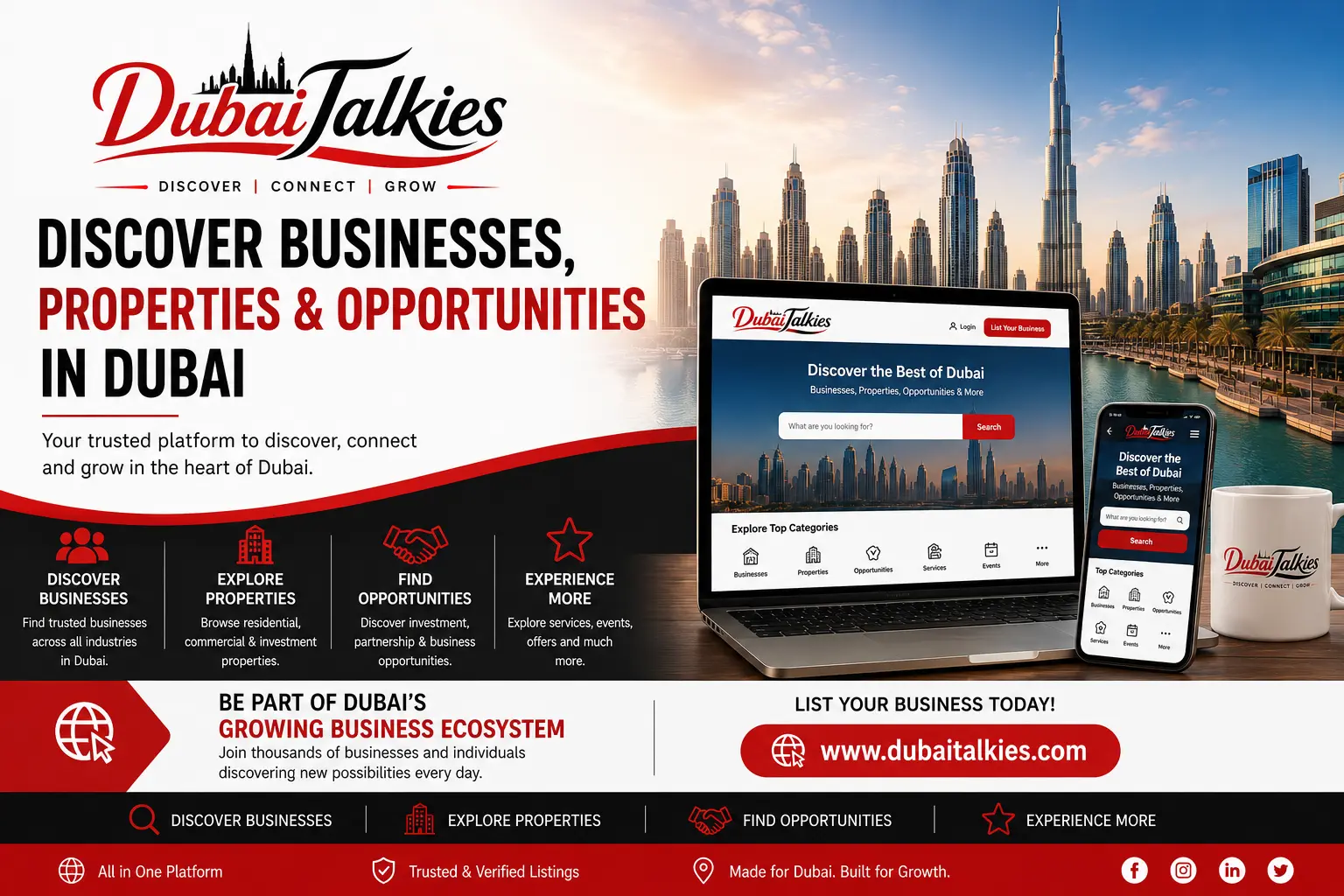
Businesses should also consider creating a professional profile on dubaitalkies, where they can showcase their company information, products, services, website, contact details, business images, and much more.
A complete digital presence helps businesses attract customers much faster after launch.
Once you have finalised your business activity, legal structure, and company name, the next step is obtaining your business licence. The licence is the official approval that allows your company to operate legally within Dubai.
The application process generally includes submitting company documents, selecting the appropriate jurisdiction, obtaining initial approvals where required, and paying the applicable government fees. Depending on the business activity, additional approvals may be necessary from industry-specific authorities.
Entrepreneurs should ensure that all information submitted during the application process matches their intended business operations to avoid unnecessary delays.
Although document requirements vary depending on the business activity and jurisdiction, most businesses are required to provide several standard documents.
These typically include passport copies of shareholders, visa copies if available, Emirates ID for UAE residents, proof of address, passport-sized photographs, and completed company registration forms.
Certain professional businesses may also require educational certificates, professional licences, or regulatory approvals before the licence is issued.
Preparing all required documents in advance helps speed up the registration process.
A corporate bank account is essential for managing business finances professionally.
Dubai offers access to many local and international banks that provide corporate banking services. After company formation, entrepreneurs can apply for a business account by submitting their licence, incorporation documents, shareholder details, and business plan where applicable.
Selecting the right banking partner should depend on transaction volume, international payment requirements, online banking facilities, customer support, and future financing opportunities.
Maintaining transparent financial records from the beginning also simplifies accounting and compliance.
Entrepreneurs should familiarise themselves with the UAE's taxation framework before starting operations.
Depending on annual revenue and business activities, companies may need to register for Corporate Tax and Value Added Tax (VAT). Businesses should also maintain accurate accounting records to ensure compliance with UAE financial regulations.
Working with experienced accounting professionals can help businesses remain compliant while focusing on growth.
If you're looking for financial experts, you may also find our guides on Top Accounting Firms in Dubai 2026 and Best Corporate Tax Consultants in Dubai 2026 helpful.
As your business grows, you may need to recruit employees or apply for investor and employment visas.
The visa process generally involves obtaining labour approvals, medical examinations, Emirates ID registration, health insurance, and residency permits.
The number of visas available often depends on your business licence, office space, and regulatory requirements.
Planning recruitment early allows businesses to expand operations smoothly.
Office requirements depend on your business structure and licensing authority.
Some businesses require physical commercial office space, while others may initially operate from business centres or flexible coworking spaces.
Entrepreneurs should select office locations based on accessibility, customer convenience, operational requirements, and future expansion plans.
Dubai offers numerous modern business centres that provide affordable options for startups and SMEs during their early stages.
Many entrepreneurs rush through company formation without adequate planning.
One common mistake is selecting the wrong business activity, which may restrict future operations or require additional licensing later.
Another frequent mistake is underestimating startup costs beyond registration fees. Businesses should budget for office expenses, marketing, technology, staffing, accounting, and ongoing compliance.
Ignoring digital marketing is another costly error. Simply registering a company does not automatically generate customers. Businesses must actively build their online presence from the very beginning.
Finally, many founders overlook branding and customer trust. A professional digital identity significantly influences purchasing decisions in today's competitive marketplace.
Starting a business is only the first step.
The next challenge is helping customers discover your company.
This is where dubaitalkies provides long-term value.
dubaitalkies is a Business Social Platform designed to help businesses improve online visibility, showcase products and services, and build digital credibility. Businesses can create professional company profiles that include detailed business information, service offerings, contact details, website links, social media profiles, images, videos, and much more.
Unlike traditional business directories, dubaitalkies allows businesses to present a complete digital identity that helps customers compare providers and make informed decisions before making contact.
Beyond business listings, dubaitalkies also supports businesses with professional growth services including Search Engine Optimization (SEO), Social Media Marketing (SMM), website development, digital marketing, business profile optimisation, branding, and content marketing. These services help businesses improve search rankings, increase brand visibility, generate qualified leads, and accelerate long-term business growth.
Whether you're launching a startup, expanding an SME, or managing an established enterprise, combining company registration with a strong digital presence gives your business a significant competitive advantage.
Dubai continues to offer one of the world's most attractive environments for entrepreneurs and investors.
Its strategic location, strong economy, modern infrastructure, supportive government policies, and access to international markets make it an ideal destination for launching and growing a business.
However, successful entrepreneurs understand that company registration alone is not enough.
Long-term success depends on selecting the right business structure, maintaining compliance, building a professional brand, investing in digital marketing, and making it easy for customers to discover your business online.
By combining proper company formation with a strong digital presence through platforms like dubaitalkies, businesses can position themselves for sustainable growth and long-term success in one of the world's most competitive business markets.
The total cost depends on the business activity, licence type, jurisdiction, office requirements, and visa applications. Startup costs vary significantly based on individual business needs.
Yes. Foreign entrepreneurs can establish businesses in Dubai under various legal structures, subject to current UAE regulations and licensing requirements.
Many businesses can complete registration within a few days if all required documents and approvals are available. More complex activities may require additional regulatory approvals.
Office requirements vary depending on the licensing authority and business activity. Some businesses require physical office space, while others may initially operate from approved business centres or flexible workspaces.
Creating a professional profile on dubaitalkies helps businesses improve online visibility, build customer trust, showcase products and services, and connect with potential customers. Businesses can also access SEO, social media marketing, website development, branding, and digital marketing services to support long-term business growth.








Comments
No comments yet. Be the first to comment!