
3 Free Reels From Your Existing Video - Creator Trial (Free)
September 16, 2026









© Dubai Talkies. All rights reserved by zubaaly management LLC.
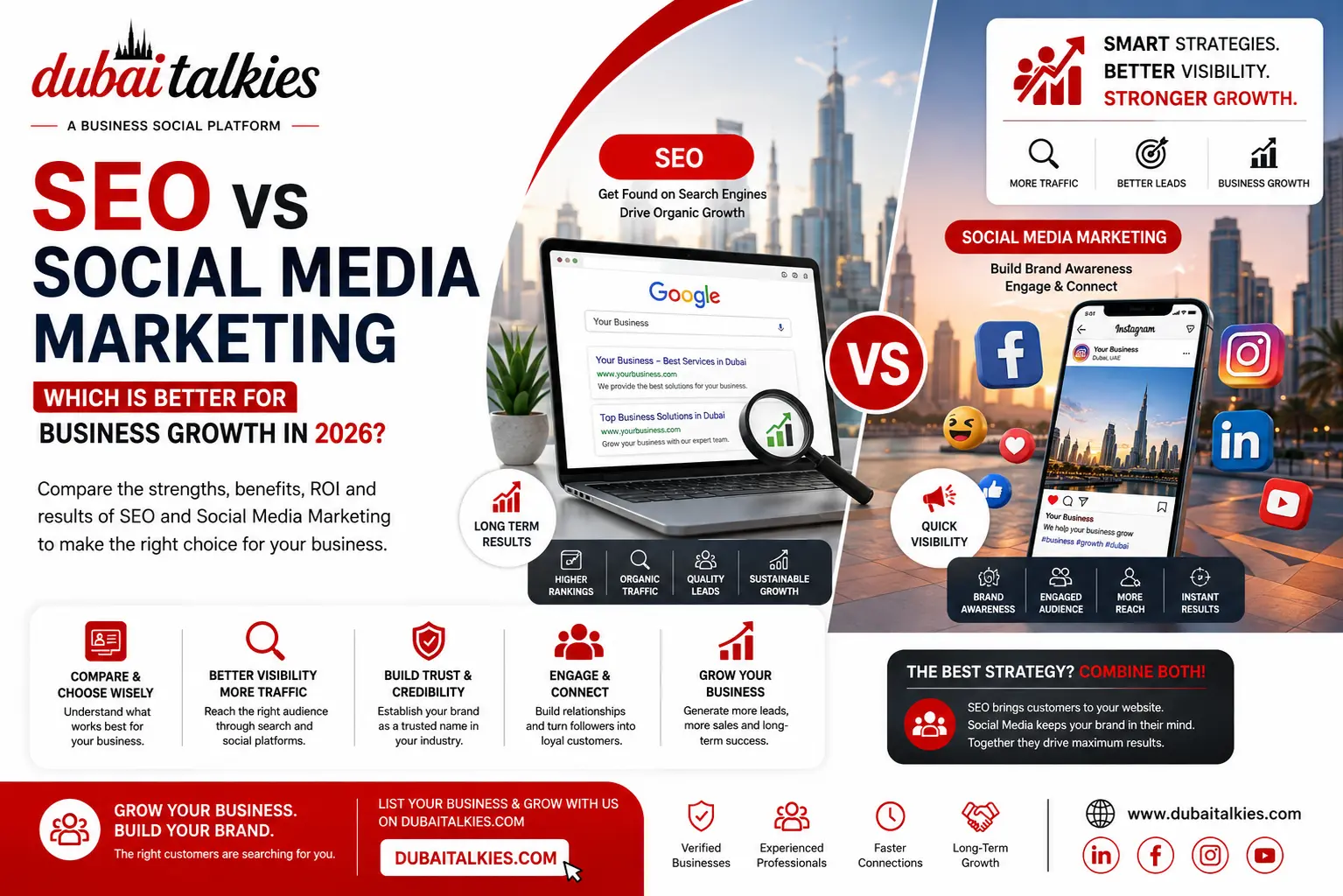
Every business wants more visibility, more customers, and sustainable growth. However, one of the most common questions business owners ask before investing in digital marketing is whether they should focus on Search Engine Optimization (SEO) or Social Media Marketing (SMM). Both strategies are powerful, but they serve different purposes and deliver results in different ways. Understanding how they work and when to use them can help businesses make smarter marketing decisions.
The digital marketing landscape has changed significantly over the last few years. Search engines are becoming more intelligent, social media platforms are constantly evolving, and artificial intelligence is influencing how customers discover products and services. As competition increases across every industry, businesses need a marketing strategy that not only attracts attention but also generates qualified leads and long-term growth.
Many companies make the mistake of choosing one strategy while completely ignoring the other. In reality, SEO and Social Media Marketing should not be viewed as competitors. Instead, they complement each other and together create a stronger digital presence. Before deciding where to invest your marketing budget, it is essential to understand the strengths, limitations, and business value of each approach.
If you are looking to improve your online visibility, you may also find these guides helpful: Why Every Dubai Business Needs a Strong Digital Presence to Grow Faster, How to Get More Customers for Your Business in Dubai, and What Is dubaitalkies and How Does It Help Businesses Grow? These articles explain how visibility, discoverability, and digital branding contribute to sustainable business success.
Search Engine Optimisation, commonly known as SEO, is the process of improving a website so that it ranks higher in search engine results for relevant keywords. The primary objective of SEO is to attract organic traffic from search engines such as Google without relying entirely on paid advertisements.
When customers search for information, products, or services online, search engines analyse millions of webpages to determine which content provides the most relevant and trustworthy answers. Businesses that optimise their websites effectively have a greater chance of appearing on the first page of search results, where most user clicks occur.
SEO is not a single activity but a long-term strategy that involves technical improvements, content creation, keyword optimisation, internal linking, user experience enhancements, and authority building through backlinks.
SEO helps businesses reach customers at the exact moment they are actively searching for information or services. Unlike traditional advertising, where businesses interrupt potential customers with promotional messages, SEO places businesses in front of users who already have purchasing intent.
For example, when someone searches for "best accounting firms in Dubai" or "ERP companies in Dubai," they are already looking for a solution. Businesses that appear in these search results receive highly qualified visitors who are much more likely to convert into enquiries or customers.
Because SEO focuses on intent-based searches, it often generates higher-quality leads compared to many other digital marketing channels.
One of the biggest advantages of SEO is its ability to deliver consistent results over time.
While SEO requires patience and continuous optimisation, well-ranked pages can continue generating traffic for months or even years after publication. A high-quality blog article or service page may attract thousands of visitors without requiring additional advertising expenditure.
This makes SEO one of the most cost-effective digital marketing investments for businesses seeking sustainable growth.
Instead of paying for every visitor through advertisements, businesses build digital assets that continue working long after they are published.
Social Media Marketing refers to promoting businesses, products, services, and brands through social networking platforms such as LinkedIn, Facebook, Instagram, X, Pinterest, and YouTube.
Unlike SEO, which focuses on capturing existing demand, social media is primarily designed to create awareness, engage audiences, build communities, and strengthen brand relationships.
Businesses use social media to publish educational content, industry updates, customer success stories, product launches, behind-the-scenes content, videos, and interactive posts that encourage audience engagement.
Social media allows companies to communicate directly with their audience while building trust through consistent content and conversations.
Social media plays an important role in brand development.
Customers often interact with businesses on social platforms before visiting their website or making an enquiry. A professional and active social media presence helps businesses demonstrate expertise, showcase company culture, highlight achievements, and build stronger relationships with existing and potential customers.
For startups and small businesses, social media provides an affordable opportunity to increase brand awareness without immediately investing heavily in paid advertising.
Platforms such as LinkedIn have become particularly valuable for B2B businesses because decision-makers regularly consume educational and industry-focused content while searching for business solutions.
Although SEO and Social Media Marketing both improve online visibility, they achieve this through completely different methods.
SEO focuses on helping customers discover businesses when they actively search for information. Social media focuses on introducing businesses to audiences who may not yet be searching but could become interested through engaging content.
SEO is driven by search intent, while social media is driven by audience engagement.
SEO generates long-term organic traffic through search engines, whereas social media generates immediate exposure through content distribution.
Understanding these differences helps businesses allocate resources more effectively while developing balanced digital marketing strategies.
One of the most important distinctions between SEO and Social Media Marketing is customer intent.
When someone searches on Google, they usually have a specific objective. They are looking for information, comparing providers, researching products, or preparing to make a purchase.
This means SEO often attracts visitors with higher buying intent.
On social media, customers are typically browsing content, networking, or consuming entertainment and educational material. While they may eventually become customers, they usually begin with lower purchasing intent than search engine users.
Both audiences are valuable, but they represent different stages of the customer journey.
Businesses often assume that the platform generating the highest number of visitors automatically delivers the best results.
However, lead quality matters far more than visitor quantity.
SEO typically produces highly qualified leads because users are actively searching for solutions.
Social media excels at building relationships, increasing brand awareness, and nurturing potential customers over time.
For businesses offering professional services, B2B solutions, consulting, software, accounting, legal services, healthcare, engineering, or technology, SEO often generates stronger long-term lead quality, while social media strengthens brand authority and customer engagement.
Every business can benefit from SEO, but certain industries see even greater returns because customers actively search for their products and services before making purchasing decisions.
Professional service providers such as law firms, accounting firms, business consultants, healthcare providers, software companies, construction contractors, real estate agencies, logistics companies, and IT service providers often receive high-quality enquiries through organic search. Their potential customers usually compare multiple companies before contacting one, making search engine visibility a significant competitive advantage.
Businesses selling specialised products or B2B services also benefit greatly from SEO because buyers conduct detailed research before making purchasing decisions. Appearing on the first page of Google during these searches positions a business as a credible option while increasing the likelihood of generating qualified leads.
If your customers search for your services before buying, SEO should be one of your highest marketing priorities.
Social media marketing is particularly valuable for businesses that rely on brand awareness, customer engagement, visual storytelling, or community building.
Restaurants, retail brands, fashion companies, fitness centres, beauty salons, influencers, event organisers, and lifestyle brands often benefit from consistent social media activity because these industries depend heavily on visual content and audience interaction.
However, even B2B companies should not ignore social media.
Platforms such as LinkedIn allow businesses to share industry insights, company achievements, educational content, and thought leadership articles that strengthen credibility among decision-makers.
Rather than replacing SEO, social media helps businesses remain visible between customer searches while building stronger relationships with existing audiences.
Businesses often ask which marketing channel is more affordable.
The answer depends on the timeframe being considered.
SEO typically requires a higher initial investment because businesses need technical optimisation, keyword research, content creation, website improvements, and ongoing optimisation. However, once pages begin ranking, they continue generating traffic without requiring payment for every visitor.
Social media marketing generally produces quicker visibility, particularly when combined with paid advertising. However, businesses usually need to continue publishing content and investing in advertisements to maintain reach and engagement.
In simple terms, SEO creates long-term digital assets, while social media requires continuous activity to sustain results.
Return on investment depends on business objectives.
If the objective is immediate brand awareness or promoting a time-sensitive campaign, social media often produces faster results.
If the objective is generating qualified organic traffic and consistent enquiries over several years, SEO generally delivers a stronger long-term return.
Businesses that invest in SEO often experience decreasing customer acquisition costs over time because organic traffic continues growing without increasing advertising expenditure.
Social media, meanwhile, remains an excellent channel for nurturing existing audiences and expanding brand reach.
The highest-performing businesses combine both strategies rather than choosing only one.
Many businesses mistakenly believe they must choose between SEO and social media.
In reality, the strongest digital marketing strategies integrate both.
SEO helps customers discover your business when they actively search for products or services.
Social media keeps your brand visible after customers discover you.
SEO answers customer questions.
Social media builds relationships.
SEO generates long-term traffic.
Social media creates regular engagement.
When these channels work together, businesses build stronger authority, improve customer trust, and generate more opportunities across every stage of the buying journey.
A successful digital marketing strategy requires more than just having a website or maintaining active social media accounts. Businesses also need platforms that improve discoverability, strengthen credibility, and provide potential customers with structured, trustworthy information about their products and services.
This is where dubaitalkies plays an important role.
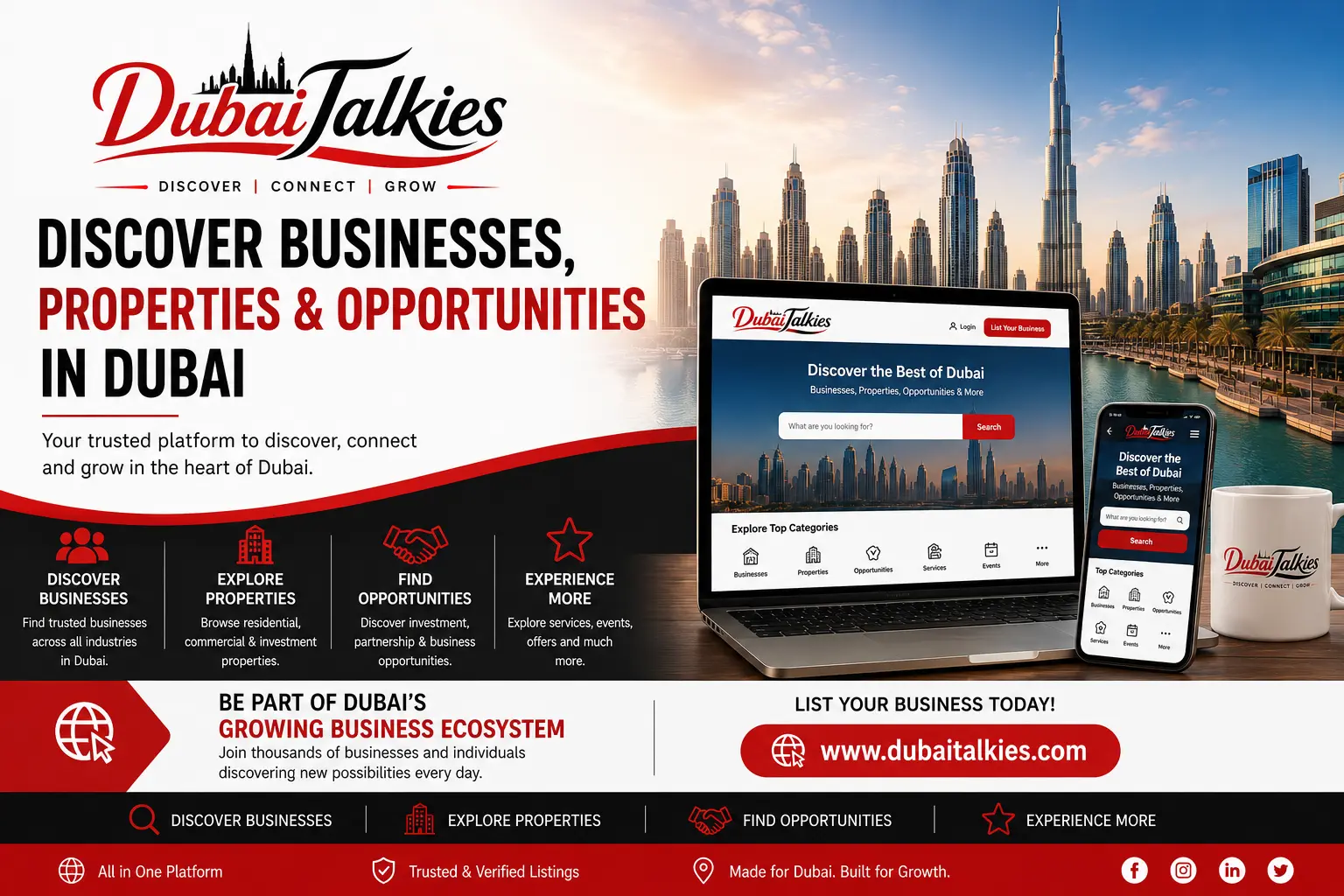
dubaitalkies is a Business Social Platform designed to help businesses establish a strong digital presence by creating professional business profiles. Companies can showcase their business information, products, services, contact details, website, social media links, images, videos, and other essential information that helps customers understand and trust their brand.
Unlike traditional business directories that simply display basic company details, dubaitalkies allows businesses to build a complete digital identity that improves online visibility and makes it easier for customers to compare, evaluate, and connect with the right service providers.
Beyond providing business listings, dubaitalkies also supports businesses with comprehensive digital growth solutions. Companies looking to expand their online presence can access professional services such as Search Engine Optimization (SEO), Social Media Optimization (SMO), website development, digital marketing, business profile optimisation, content marketing, branding, and other business growth solutions. This enables businesses to not only become discoverable but also improve their search rankings, strengthen their online reputation, and generate more qualified leads.
Whether you are a startup, SME, freelancer, consultant, agency, technology company, healthcare provider, law firm, real estate agency, logistics company, manufacturer, or large enterprise, building your digital presence across multiple channels with the support of dubaitalkies creates a stronger foundation for sustainable business growth and long-term customer acquisition.
The answer depends on your business goals.
If your objective is generating long-term organic traffic and attracting customers actively searching for your services, SEO should be your primary investment.
If your objective is increasing brand awareness, engaging audiences, and building customer relationships, social media should be an essential part of your strategy.
However, businesses seeking sustainable growth should not treat these channels as competitors.
The most successful companies invest in both while maintaining a professional digital presence through trusted business discovery platforms such as dubaitalkies.
A balanced strategy creates greater visibility, stronger credibility, and more opportunities for long-term business growth.
SEO and Social Media Marketing both play important roles in modern business growth, but they solve different problems.
SEO helps businesses become discoverable when customers are actively searching for products or services. Social media helps businesses remain visible, build relationships, and strengthen brand recognition over time.
Rather than asking which strategy is better, businesses should ask how these strategies can work together.
Combining search engine optimisation, social media marketing, and a professional business profile on dubaitalkies creates a stronger digital ecosystem that supports customer discovery, trust, and lead generation.
As customer behaviour continues evolving, businesses that invest in discoverability instead of relying on a single marketing channel will be better positioned for long-term success.
SEO is generally better for generating long-term organic traffic and qualified leads, while social media excels at building brand awareness and customer engagement. Both strategies work best when used together.
Yes, but growth often becomes dependent on paid advertising and social media. SEO provides sustainable organic visibility that reduces long-term customer acquisition costs.
Social media does not directly influence Google rankings, but it increases content visibility, website traffic, and brand awareness, which can indirectly support SEO performance.
A professional business profile on dubaitalkies helps businesses improve online discoverability, showcase their products and services, strengthen digital credibility, and make it easier for customers to find and contact them.
Startups, SMEs, agencies, consultants, law firms, accounting firms, healthcare providers, technology companies, real estate businesses, logistics companies, construction firms, and service-based businesses can all benefit from combining these three digital growth strategies.







Comments
No comments yet. Be the first to comment!